
Home
CANCER BLOOD TESTS
With Early Tumor Detection and Screening
-
- OTraces, Inc. has built, and extensively filed patents protection on, an early tumor detection and cancer screening software technology.
- Technology uses well-known math- and physics-based A-I methods including those used in advanced satellite communications — that is being applied to biological cancer testing for the first time.
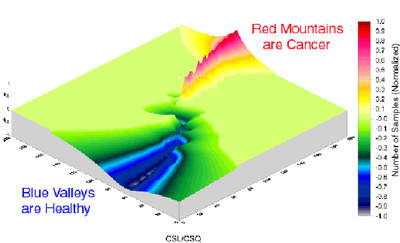
- The result has been cancer blood tests with extraordinary accuracy and precision.
- OTraces is the only this method can access the diagnostic content of the TME (tumor microenvironment), and that can determine tumor progression non-invasively and in real time.
- OTraces can boost predictive power and optimize biomarker performance of any correlative diagnostic test — DNA- and RNA-based approaches included.
- This technology can detect cancer as early as Stage 0-1 tumors – at low cost while using ordinary instrumentation deployed in labs and clinics worldwide.
The following video demonstrates this technology and outlines its potential.
Contacts:
Company/Investor Inquiries:
Keith Lingenfelter; Founder and CEO of OTraces, Inc.
phone: +01-301-529-3824 cell/txt
email: keith.lingenfelter@otraces.com
Contact-Media Inquiries:
Nancy Rose Senich
phone: +01-202-262-6996 cell/txt
email: nancy@rose4results.com
Recent Posts
- View Report, Diagnostic Proteomics — A New Approach, White Paper
- PowerPoint Presentation, How Does Proteomic Noise Suppression Work
- View Report, Blinded Validation of BC SeraDx Test at Gertsen Institute, for Breast Cancer Screening
- View Report, Blinded Validation of PR SeraDx Test at Johns Hopkins for Prostate Cancer Screening
- View Report, Validation of LC SeraDx Test for Non-small Cell Lung Cancer Screening